


Key Takeaways
- ABA therapy offers individualized, one-on-one interventions that support skill development in children with autism and other developmental challenges.
- Traditional schooling provides a more comprehensive range of academic and social experiences, including peer interaction and structured learning environments.
- ABA therapy and school serve different but often complementary roles in a child’s development.
- The best approach will depend on the child’s developmental stage, needs, and goals. This decision should be made collaboratively, involving family, therapists, and educators.
Does ABA Therapy Replace School? Insights for Parents
When considering ABA therapy, one of the most pressing questions that arises for parents is: Does ABA therapy replace school? The decision to prioritize ABA therapy, traditional schooling, or a combination of both can feel overwhelming. In this article, Above and Beyond Therapy, leading providers of ABA therapy, will help you navigate the differences and benefits of ABA therapy and school, as well as key factors to consider, empowering you to make an informed decision based on your child’s individual needs.
Understanding ABA Therapy
Applied Behavior Analysis (ABA) therapy is an evidence-based approach used to support children with autism spectrum disorder (ASD) and other developmental challenges. Rooted in behavioral psychology, ABA focuses on understanding how behavior functions, its environmental influences, and the process of learning and adapting.
ABA therapy looks at learning new skills in real-world settings by breaking down tasks into smaller, ‘bite-sized’ parts. The primary goal is to improve communication skills, enhance social skills, and develop self-care and daily living skills.
The Role of Traditional Schooling for Children with Autism
Traditional school settings offer a structured environment designed to support a diverse range of learners. The benefits of school include the academic curriculum and a structured routine. It provides opportunities for meaningful social interactions with peers, exposure to diverse experiences and learning styles, as well as access to professional educators.
Schools, however, have their setbacks when it comes to children with autism, including larger class sizes. This can limit individual attention and cause sensory overload, overstimulation, or social anxiety due to the busy environment. That said, many schools now employ resource rooms and adaptive teaching methods to facilitate learning and participation for children who require extra assistance.

ABA Therapy vs School: What Parents Should Know
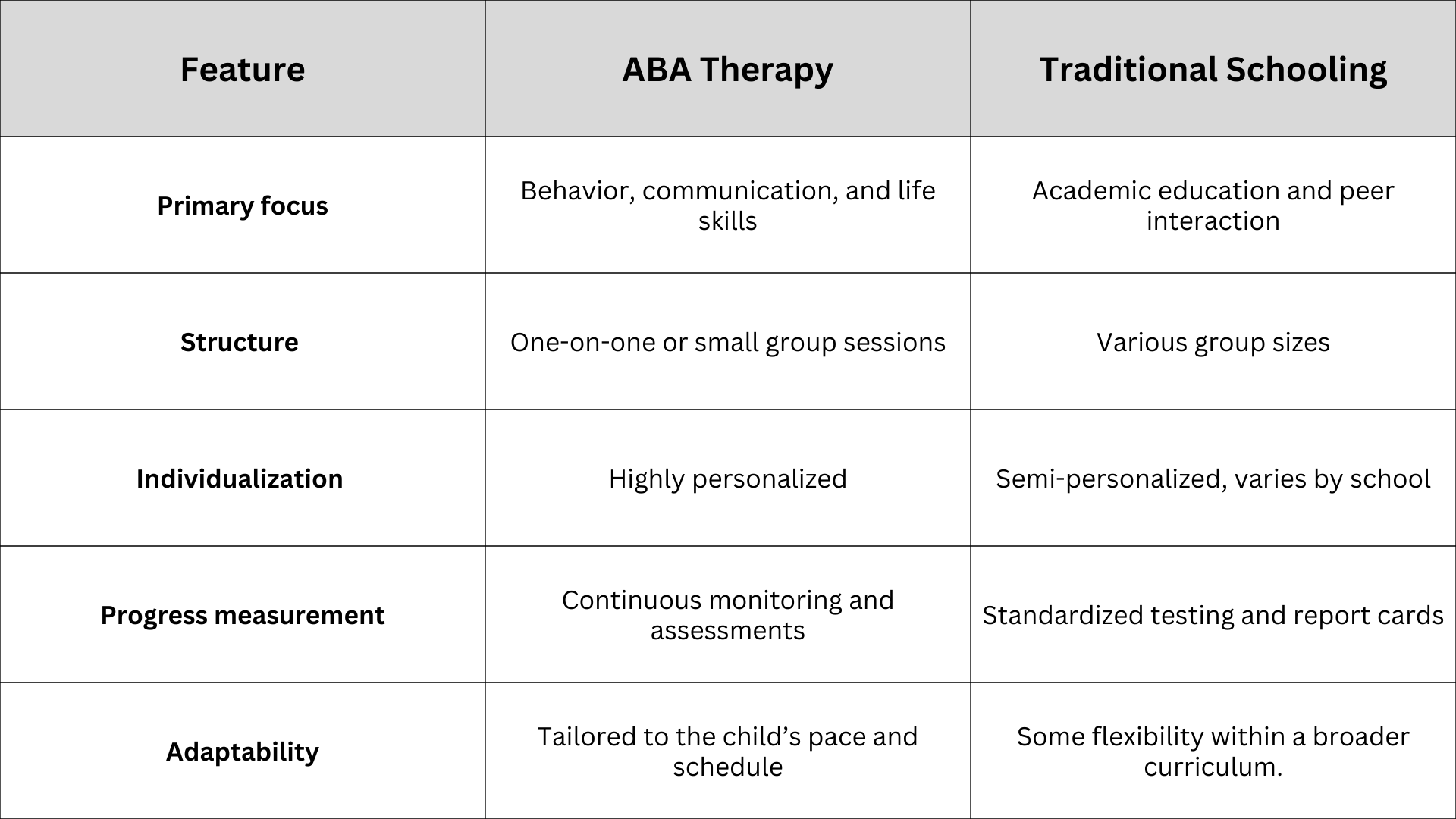
ABA therapy and traditional schooling both have benefits, and there are many aspects to consider before making a decision. Below is a chart comparing ABA vs school:
Does ABA Therapy Serve as an Alternative to Schooling?
ABA therapy serves as a supplement, not a full alternative, to traditional schooling. It targets behavioral, social, and communication skills, but lacks a structured academic curriculum. Most children need both ABA and formal education to address developmental and educational goals effectively. ABA therapy can be a temporary alternative to school for children who may not be ready for the school environment yet. However, ABA therapy is not a complete academic replacement in the long term. While it focuses on essential life and learning skills, it does not offer the comprehensive educational curriculum and social experience provided by schools.
Scenarios where short-term intensive ABA intervention may be recommended include when:
- A child demonstrates severe behavioral challenges that impact their ability to learn.
- A child is not thriving in a traditional classroom setting, even with accommodations.
The Complementary Roles of ABA Therapy and Schooling
Rather than viewing ABA therapy and school as mutually exclusive, many individuals find that combining both yields the most success. Working together, therapists, teachers, and families can create coordinated approaches that reinforce learning across settings. This enables greater consistency and generalization of skills. At Above and Beyond Therapy, we offer ABA therapy services at school.
ABA therapy’s role includes:
- Preparing children for the school expectations
- Addressing behavior and attention challenges that interfere with classroom learning
- Support the child’s learning goals
- Facilitating a smoother transition into the school environment.
Integration of ABA Therapy in School Settings
Many schools recognize the value of ABA principles and are increasingly integrating them into their teaching practices to create a more inclusive environment for their students. This may include on-site ABA therapists, aides, and advanced teacher training, ensuring that ABA strategies are consistently implemented and reinforced. This integration helps ensure consistency in how a child is supported across various settings.

Transitioning Between ABA Therapy and School: Best Practices
Successfully transitioning a child from an intensive ABA program to a school environment requires planning and collaboration. Here are some practical points and considerations for ensuring continuity in learning and support:
- Evaluate Readiness: Asking questions such as, “Can my child communicate their needs, can they follow instructions, and safely navigate the classroom,” is essential in evaluating the child’s readiness to be introduced to school.
- Team Collaboration: Therapists, educators, and family members should be involved in the transition to school to ensure a seamless process.
- Gradual Introduction: Begin with part-time or supported enrollment, gradually increasing school presence.
- Individualized Education Plans (IEPs): Ensure that ABA-derived goals and supports are implemented in the school setting to facilitate a successful transition.
- Continuous Monitoring: Track progress regularly and adjust support as needed.
Assessing Your Child’s Unique Needs: A Personalized Approach
When deciding between ABA therapy or school, it is important to keep in mind that every child is unique and will therefore have their strengths and challenges. Here are some points to consider when making the decision:
- Age and developmental stage
- Severity and type of symptoms
- Academic readiness to participate in classroom activities.
- Social and emotional well-being, particularly in group settings.
- Family goals and values
Questions to Consider When Deciding Between ABA Therapy and School
To help with making the decision, we have put together some questions for parents and caregivers to ask themselves or any professionals involved in their child’s progress:
- What are my child’s current developmental, emotional, and educational needs?
- Does my child benefit more from structured, one-on-one instruction or group and social learning?
- How does my child currently handle transitions, sensory environments, and social interactions?
- What are my child's communication needs, and how are they best supported?
- Is my child currently making progress in their current setting?
- Is my child engaging in any behaviors that may pose a danger to themselves or others?
It is important to consider the perspective of everyone involved in your child’s care to obtain a balanced view of your child’s needs.

Common Misconceptions: Debunking Myths about ABA Therapy and Schooling
Let's address a few of the common myths about ABA therapy vs school:
- Myth: ABA therapy can fully replace the need for school.
Fact: While ABA can provide temporary educational support, it does not replace the full range of academic, social, and developmental opportunities that schools offer. - Myth: Schools can’t implement ABA.
Many schools use ABA-informed strategies in their learning, especially in special education settings. - Myth: Choosing ABA means giving up on traditional education.
Many children benefit from a hybrid approach where ABA and schooling work hand-in-hand for optimal results.
Deciding If ABA Therapy Should Replace School
ABA therapy and school each play a crucial role in the development of children with autism. While ABA therapy offers individualized, skill-building foundations, traditional schooling provides the academic and social environment necessary for long-term growth and development.
Choosing between ABA therapy and school isn’t a one-size-fits-all decision. Often, the best outcomes come from a collaborative, balanced approach that evolves as the child grows, with each aspect enhancing the child’s development in unique ways.
At Above and Beyond Therapy, we support families in creating tailored plans that meet your child’s unique needs. Our team is here to help you navigate the educational journey with confidence and clarity. If you are interested in learning more about ABA therapy and how it could help your child, contact us today. We’d love to help!
Does ABA Therapy Replace School: FAQs
Is ABA a replacement for school??
ABA is not a replacement for school. It focuses on improving behavior, communication, and life skills, but does not cover academic subjects required in formal education. Children benefit most when ABA is combined with school to support both behavioral and educational development.
What are the benefits of combining ABA with school?
Combining ABA with school improves both behavioral and academic outcomes. ABA enhances focus, social interaction, and emotional regulation, while school provides structured learning and peer engagement. Together, they support well-rounded development and help children generalize skills across environments.
How do I decide if my child should attend school or continue with ABA therapy?
Decide between school and ABA therapy by evaluating your child’s developmental needs, academic readiness, and behavioral goals. Consult with educators, therapists, and medical professionals to assess progress and determine if a combined approach offers the most balanced support.
Are there specific programs that integrate ABA therapy effectively into schools?
Yes, some schools offer integrated programs that combine ABA therapy with academic instruction. These programs use individualized education plans (IEPs), classroom-based behavior support, and collaboration with certified ABA therapists to support both learning and behavioral development in a unified setting.


.jpg)



.png)