

Key Takeaways
- Co-occurrence is recognized with around 16-18% of children with Down syndrome also having autism.
- Signs of autism in individuals with Down syndrome can overlap with or differ from signs in those with one condition, making diagnosis more complex but important.
- Getting the right diagnosis early on is crucial. It helps families access the most effective interventions and support as soon as possible, maximizing the potential for positive outcomes.
- There are specialized organizations, parent groups, and multidisciplinary professionals that can provide families with comprehensive emotional, educational, and practical support. These resources are invaluable in navigating the complexities of DS-ASD.
Understanding the Link Between Down Syndrome and Autism
Autism and Down syndrome are two distinct developmental conditions that affect how individuals learn, communicate, and interact with the world. While each has unique characteristics, they can also co-occur, creating a complex profile that requires a personalized approach to support.
Understanding the similarities, differences, and potential overlap between Autism and Down syndrome is crucial for delivering effective care, education, and support. At Above and Beyond Therapy, we’ve proudly supported children with autism for years, and we’re committed to helping families better understand and care for kids with Down syndrome and autism.
Can You Have Down Syndrome and Autism?
Yes, individuals can have both Down syndrome and autism spectrum disorder (ASD). This co-occurrence, often known as a dual diagnosis or DS-ASD, presents unique challenges and therefore has its opportunities for targeted intervention and support. Understanding how these two diagnoses intersect is essential for parents, caregivers, and professionals aiming to provide the best possible care.
Defining ASD and Down Syndrome
Understanding the differences between these two disorders is essential to fully grasp the complexity of their co-occurrence.
What Is Down Syndrome?
Down syndrome is a genetic condition caused by the presence of an extra copy of chromosome 21 in a person's genes, also known as trisomy 21. This affects the individual's physical development, cognitive functioning, and overall health.
Common features include:
- Distinct facial characteristics, such as downward slanted eyes
- Mild to moderate intellectual disability
- Hypotonia (low muscle tone)
- Delayed speech and motor development
- Increased risk for certain health issues, such as heart defects or hearing problems.
Despite these challenges, individuals with Down syndrome can thrive with the right support and opportunity. They can display rich personalities, emotional warmth, and an eagerness to engage with those around them.
What is Autism Spectrum Disorder?
Autism spectrum disorder, or ASD, is a neurodevelopmental condition characterized by:
- Persistent difficulties in social communications and interactions
- Restricted, repetitive patterns of behavior, interests, or activities
- Sensory sensitivity, such as aversions to certain sounds, textures, or lights
- Wide variabilities in intellectual functioning, language skills, and abilities
Autism is referred to as a “spectrum” because the symptoms can vary widely from person to person. While some individuals may have significant language and intellectual impairments, others may excel in academics but struggle socially.
What Does DS-ASD Mean?
DS-ASD stands for Down syndrome-Autism Spectrum Disorder and is used to refer to individuals who have been diagnosed with both conditions. This dual diagnosis means the person has the genetic traits of Down syndrome as well as a clinically significant autism spectrum disorder.
While each condition presents its own developmental profile, having both together results in a unique combination of strengths and challenges. Identifying and understanding DS-ASD is key to developing the most effective educational and therapeutic strategies that will guide the individual to live a full and fulfilling life.
How Common is Autism in Down Syndrome?
While co-occurring autism and Down syndrome are not the norm, it is not extremely rare either. Recent studies have estimated that 16-18% of individuals with Down syndrome also have autism. Improved awareness and better diagnosis techniques have led to increased identification of ASD in children with autism, ensuring that more individuals get the help they need.
The implications of both diagnoses include:
- Impacting developmental milestones in more complex ways
- Requiring specialized therapeutic approaches
- Influencing communication and behavior
Signs and Symptoms of ASD in Children with Down Syndrome

Recognizing autism in a child who already has Down syndrome can be challenging. This is because many early behaviors associated with both conditions overlap, such as language delays or sensory sensitivities. However, certain characteristics are more indicative of autism.
Behavioral Signs of Autism in Down syndrome
Some common behavioral signs of autism in children with Down syndrome include:
- Difficulties in social interactions: Limited eye contact, little interest in peers, avoidance of shared activities, and lack of imaginative or pretend play.
- Communication challenges: Delays in language development, reduced use of spoken words, and limited use of gestures to express needs or emotions.
- Repetitive behavior: This includes behaviors such as hand flapping, rocking, lining up toys, insisting on routines, and resistance to changes in the environment or schedule.
- Loss of skills: Regression in social, language, or self-care abilities.
Emotional and Sensory Sensitivity in Autism and Down Syndrome
Another challenge for those with both Down syndrome and autism is emotional and sensory sensitivity. This includes:
- Sensitivity to sensory stimuli: Overreaction or lack of response to sounds, lights, textures, touch, or pain.
- Emotional regulation: Intense emotional responses, difficulty calming down, or challenges with transitioning between activities.
- A need for sameness: Resistant to changes and a need for predictability.
- Social withdrawal: Appearing “in their own world” or less interested in interactions.
How is ASD Diagnosed in Children with Down Syndrome?
Diagnosing DS-ASD requires a team of specialists with experience in both Down syndrome and autism. The process typically involves:
- Developmental observation: Parents, caregivers, therapists, or educators are typically the first to recognize symptoms of autism spectrum disorder.
- Comprehensive evaluations: Pediatricians or neuropsychologists can use a variety of tests or surveys as a formal evaluation to diagnose the presence of autism.
- Standardized tools: Social interactions, communication, and adaptive functioning are measured, and interventions are applied as necessary.
Challenges in Diagnosing Autism With Down Syndrome
Diagnosing autism in individuals with Down syndrome can be multifaceted. Here are some reasons why this may be challenging and potentially overlooked:
- Overlapping symptoms: Both conditions can involve similar symptoms, such as speech delays and attention challenges, so that symptoms of ASD are misattributed to Down syndrome.
- Masked traits: A child’s social behavior may appear more typical due to the friendly nature often associated with Down syndrome, even if autism-related characteristics are present.
- Delayed identification: In many cases, autism is not noticed in children with Down syndrome until later, commonly around 4 years old.
Intervention for Down Syndrome and Autism Dual Diagnosis
While there is no cure for Down syndrome or autism, a detailed diagnosis calls for a thorough and thoughtfully tailored approach. Many strategies used for ASD can be successfully adapted for kids with DS-ASD, with personalization to meet individual needs.
Early Intervention Programs for ASD and Down Syndrome
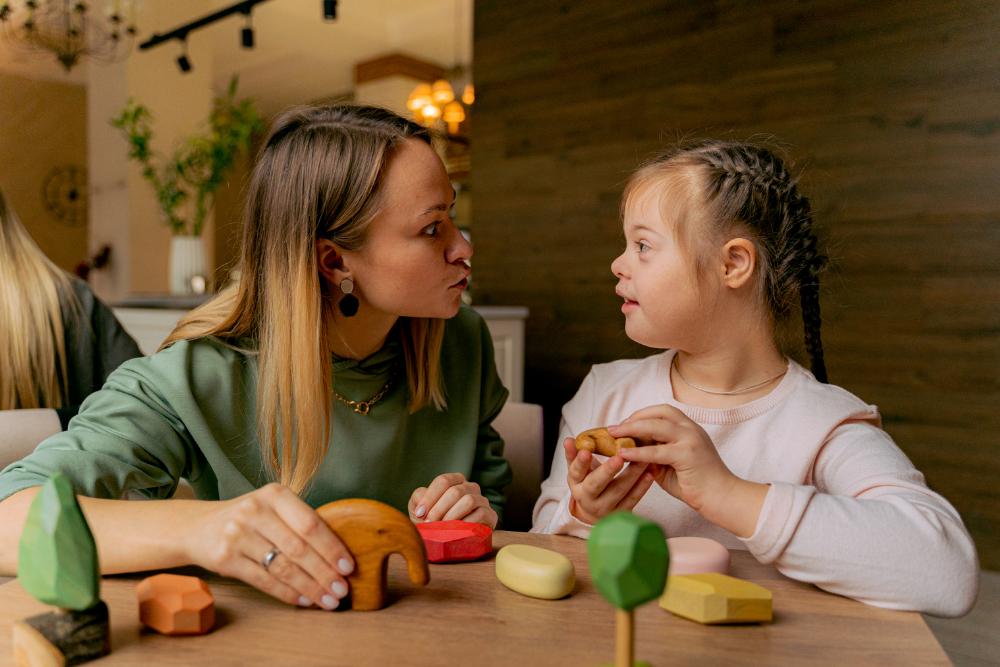
Early intervention includes a set of supports and therapies provided as soon as there are concerns about a child’s development. These programs may include:
- Speech and language therapy
- Occupational therapy
- Physical therapy
- Behavioral interventions such as Applied Behavior Analysis (ABA)
- Family training and support.
Collaborative Care Approaches to Down Syndrome and Autism Comorbidity
Children with a dual diagnosis of Down syndrome and autism benefit the most from multidisciplinary care, where a variety of professionals work together and coordinate efforts to create an individualized plan. Having a coordinated team approach ensures that no aspect of a child’s development is overlooked (and that includes ensuring that the parents and family receive the support they need to continue managing care).
Key elements include:
- Comprehensive care by developmental pediatricians, psychologists, speech and occupational therapists, and special education teachers
- Regular reviews and adaptations of strategies are necessary as the child develops and learns new skills
- Inclusive education that welcomes the child in settings with peers, with suitable accommodation and support
- Emotional support for families
Navigating Life with Autism and Down Syndrome
Understanding the intersection of Down syndrome and autism spectrum disorder (ASD) is an important step towards providing compassionate, informed, and effective support. While a DS-ASD dual diagnosis comes with added complexities, it also presents an opportunity for more effective care, ensuring that the individual can grow and thrive.
With the right tools, professional guidance, and community support, children with both Down syndrome and autism can lead fulfilling, connected, and joyful lives. Reach out to us at Above and Beyond Therapy to learn how we can help you navigate this journey.
FAQ: Down Syndrome and Autism
What causes autism and Down syndrome?
Down syndrome is caused by a genetic condition where an extra copy of chromosome 21 is present. Autism, on the other hand, is a neurodevelopmental condition as a result of genetic and environmental factors. While the two conditions have distinct origins, research has shown the increased likelihood of them co-occurring in the same individual.
Do all people with Down syndrome have autism?
No, not all individuals with Down syndrome have autism. However, autism is more common in individuals with Down syndrome than in the general population.
Why is autism more common in people with Down syndrome?
The exact reason for this co-occurrence is still being explored; however, it is believed that the neurological and genetic profile associated with Down syndrome may increase vulnerability to autism.
How rare is it to have autism and Down syndrome?
Having both Autism Spectrum Disorder (ASD) and Down syndrome is relatively uncommon but not rare. Studies estimate that 16-18% of individuals with Down syndrome also meet the criteria for autism.
Where can I find support for my child with DS-ASD?
Families can find support through a variety of sources, including:
- Local and national organizations such as the National Down Syndrome Society (NDSS), Autism Speaks, and The Arc
- Parent-led support groups that connect families facing similar situations
- Online communities and forums, such as Facebook groups or Reddit communities.
- Therapy centers and clinics, like Above and Beyond Therapy, offer individualized care and guidance


.jpg)

.jpg)

.png)