


Key Takeaways: Can a Behavior Analyst Diagnose Autism
- Behavior analysts, including BCBAs, are not licensed to diagnose Autism Spectrum Disorder (ASD). Diagnosis is reserved for medical and psychological professionals.
- While BCBAs are experts in behavior assessment and intervention, diagnosing ASD falls outside their ethical and legal responsibilities.
- Diagnosing ASD involves developmental, medical, and psychological evaluation using tools like the ADOS and DSM-5, which is beyond a behavior analyst’s training.
- Once a diagnosis is made, BCBAs design and implement individualized, data-driven treatment plans using Applied Behavior Analysis (ABA) principles.
- Formal diagnosis opens the door to early intervention services, which significantly improve long-term outcomes for individuals with autism.
Can Behavior Analysts Diagnose Autism Spectrum Disorder?
While behavior analysts are highly skilled in assessing and treating behaviors associated with autism spectrum disorder (ASD), they generally cannot independently diagnose ASD.
Autism presents a unique set of challenges, making a timely and accurate diagnosis paramount for effective intervention. While Board Certified Behavior Analysts (BCBA’s) are uniquely skilled in addressing the behavioral manifestations of autism, their precise role in the diagnostic process is often misunderstood. At Above and Beyond Therapy, we’re proud to have a team of compassionate and highly skilled BCBAs. Let’s take a closer look at the important role they play and the scope of their responsibilities in supporting the children and families we serve.
Can a BCBA Diagnose Autism?
Board Analysts can’t diagnose autism as they operate under strict legal and ethical guidelines that clearly delineate their scope of practice. They are explicitly prohibited from providing medical or psychological diagnoses, including autism. This limitation is rooted in several key factors:
- BCBAs’ Professional Competence and Training
- Behavior analysts are trained in the principles of ABA and focus on analyzing and changing observable behavior.
- Diagnosis, specifically for complex conditions like autism, requires specialized training in developmental psychology, medicine or psychiatry.
- Legal Scope of BCBA Practice
- Licensing boards and professional organizations define the boundaries of what a behavior analyst can legally do. These regulations typically reserve diagnostic authority for medical doctors, licensed psychologists and other designated healthcare providers.
- BCBA Ethical Responsibilities
- The ethical codes governing behavior analysts emphasize working within their professional competence and avoiding misinterpretation of their qualifications. Diagnosing would fall outside this boundary.
- Their role is to assess behavior to identify strengths, deficits and environmental factors influencing behavior, which then informs the development of individualized intervention plans.
Why Is an Autism Spectrum Disorder (ASD) Diagnosis Important?
Autism Spectrum Disorder is a complex neurodevelopmental condition characterized by a range of challenges in social communication, interaction and repetitive behaviors.
Social Communication Challenges in ASD
- Difficulty with eye contact
- Limited reciprocal social interaction
- Trouble understanding non-verbal cues
- Delayed or unusual speech development
Autistic Repetitive Behaviors and Restricted Interests
- Repetitive movements (hand-flapping, rocking)
- Strong adherence to routines and resistance to change
- Intense, focused interests in specific topics
- Unusual reactions to sensory input
Why Is Early Diagnosis of ASD So Important?
An early diagnosis of ASD is integral for the following reasons:
- Unlocks Access to Interventions: Diagnosis is the gateway to specialized therapies and support services, which are otherwise often inaccessible.
- Optimizes Intervention Effectiveness: Early diagnosis allows for immediate initiation of interventions, significantly improving outcomes.
- Facilitates Targeted Support: A definitive diagnosis enables personalized treatment plans and educational strategies tailored to the child’s specific needs.
How Is Autism Diagnosed?
Diagnosing autism is a detailed process with no single medical test. It hinges on multifaceted evaluations, which are crucial for understanding an individual's unique behavioral, social and communication patterns. This thorough approach ensures an accurate diagnosis, vital for tailoring effective interventions and support.
Common ASD Diagnostic Tools
These tools are widely used to assess and gather information critical for an ASD diagnosis.
- Autism Diagnostic Observation Schedule (ADOS): A standardized, play-based assessment observing social interaction, communication, and repetitive behaviors.
- Autism Diagnostic Interview-Revised (ADI-R): A structured interview with parents or caregivers to gather detailed developmental history.
- Diagnostic and Statistical Manual of Mental Disorders (DSM-5): The official criteria used by clinicians to diagnose ASD, focusing on persistent deficits in social communication and restricted, repetitive patterns of behavior.
Professionals Who Can Diagnose Autism
Although behavior analysts can't diagnose autism spectrum disorder, there are a range of highly skilled professionals who are qualified to do so.
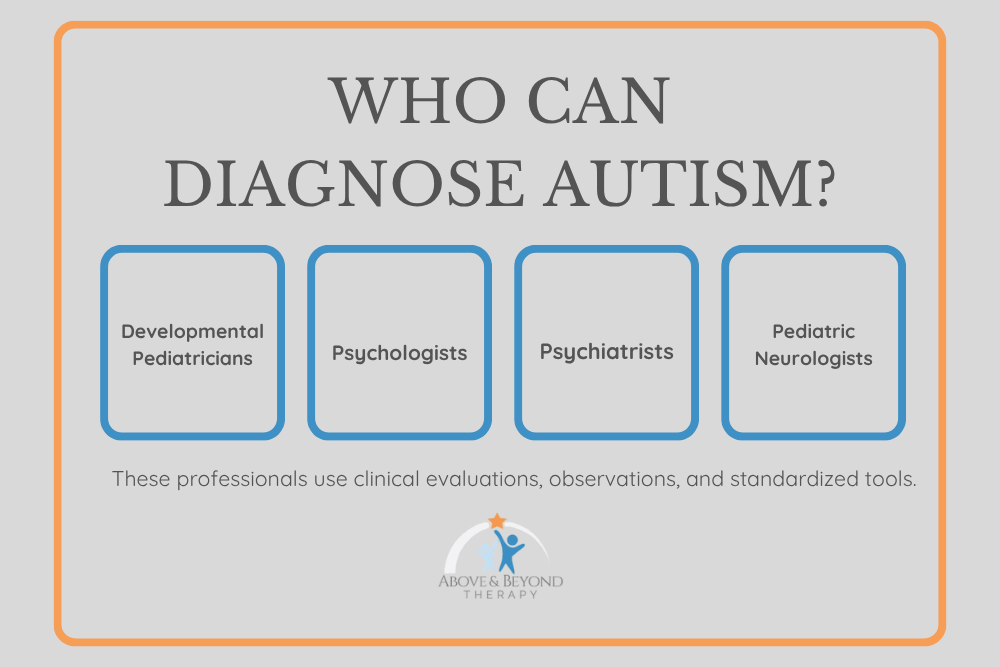
- Developmental Pediatricians: Physicians specializing in child development and behavior, often conducting initial screenings and coordinating further assessments.
- Psychologists: Professionals trained in mental health who administer specialized diagnostic tools and assess cognitive and behavioral profiles.
- Psychiatrists: Medical doctors specializing in mental health disorders, who can diagnose ASD and address co-occurring psychiatric conditions.
- Pediatric Neurologists: Medical doctors who specialize in diagnosing and treating disorders of the brain, spinal cord, nerves, and muscles in children.
What Is the Role of Behavior Analysts?
Behavior analysts utilize principles of learning and motivation to address socially significant behaviors. This includes developing and implementing evidence-based interventions to reduce challenging behaviors and teach new skills to individuals with autism.
A BCBA is required to have a masters or doctoral degree, supervised experience, and typically Board Certified Behavior Analyst (BCBA) certification.
BCBA’s emphasize comprehensive behavioral assessments to identify the function of behaviors and the environmental factors maintaining them, rather than providing formal medical diagnoses. Interventions are then designed to directly modify behavior based on this functional understanding.
How Behavior Analysts Collaborate With Other Professionals
Behavior analysts often collaborate with other professionals to provide comprehensive client care. This multidisciplinary approach ensures a holistic understanding of client needs and integrated intervention plans.
Here’s how BCBA’s collaborate with other professionals:
- Pediatricians: Collaborate to rule out medical causes for behaviors and share developmental insights.
- Psychologists: Partner for comprehensive behavioral, cognitive, and emotional assessments and differential diagnosis.
- Speech Therapists: Work together to address communication deficits and integrate language goals into behavioral plans.
Autism Referral vs Diagnosis
Behavior analysts excel at understanding and changing behavior; however, it is crucial to note the distinction between their roles in referral and formal diagnosis. Within their expertise, behavior analysts can assess and identify:
- Skill Deficits: What specific skills are missing or underdeveloped?
- Behavioral Excesses: What behaviors are occurring too often, too intensely or in inappropriate contexts?
- Environmental Factors: Analyze triggers and maintain consequences for behaviors.
- Preference Assessment: Identify motivators for each individual.
How Behavior Analysts Contribute to Treatment

Behavior analysts play a key role in the treatment of individuals diagnosed with autism spectrum disorder by developing and implementing evidence-based interventions. Following a diagnosis, their contribution is systematic and data-driven, focusing on observable behaviors and their environmental influences.
Here’s how behavior analysts contribute to treatments:
- Comprehensive Assessment and Data Collection: Conduct Functional Behavior Assessments (FBAs) to identify target behaviors and their functions. Collect data to establish baselines and track progress.
- Intervention Plan Development: Create individualized Behavior Intervention Plans (BIPs) with SMART goals for behavior change, including proactive and reactive strategies. Focus on teaching appropriate behaviors and utilizing positive reinforcement.
- Implementation and Supervision: Oversee BIP implementation, training and supervising Registered Behavior Technicians (RBTs) and caregivers to ensure consistency.
- Monitoring and Adjusting: Continuously analyze data, adjusting BIPs as needed to optimize outcomes. Collaborate with other professionals and families for a cohesive approach.
The Responsibilities of Behavior Analysts in Autism Diagnosis
Navigating the complexities of autism spectrum disorder demands a comprehensive and integrated approach, spanning from timely and precise diagnosis to the implementation of evidence-based interventions. Within this collaborative framework, behavior analysts emerge as vital contributors.
While the authority for formal diagnosis rests with specialized medical and psychological professionals, behavior analysts offer indispensable, data-driven expertise in meticulously assessing behaviors and crafting individualized intervention plans that significantly improve the lives of those with ASD.
At Above and Beyond Therapy, we’re proud to have a dedicated team of highly skilled BCBAs who truly have every child's best interests at heart. We're here to support you through every step of the diagnostic journey. Don’t hesitate to reach out, our incredible team is ready to help your child reach their full potential.
FAQ’s: Can Behavior Analysts Diagnose Autism Spectrum Disorder
Can a BCBA complete an ADOS?
Yes, A BCBA can administer the ADOS; however, they cannot provide a formal diagnosis of autism.
What are the differences between a BCBA and a psychologist?
The difference between a BCBA and a psychologist lies in their primary focus and scope of practice. A BCBA specializes in applying ABA to modify observable behaviors, often working with children with autism, while a psychologist has broader training to diagnose and treat a wider range of mental health conditions.
What should parents do if they suspect their child has autism?
If parents suspect their child has autism, they should immediately consult their pediatrician or a developmental specialist to discuss concerns and request a comprehensive developmental evaluation. Early intervention is critical.


.jpg)

.jpg)


.png)